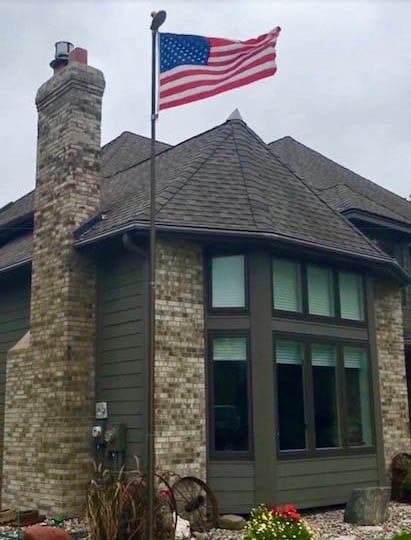


If you’re considering installing a telescoping flagpole, one question almost always comes up:
“How much wind can it handle?”
It’s a fair question. After all, your flagpole may spend years standing through thunderstorms, winter storms, gusty spring weather, and the occasional severe wind event.
The answer, however, is a little more complicated than a single number.
The amount of wind a telescoping flagpole can withstand depends on several factors, including the pole’s construction, the size of the flag being flown, the installation quality, and whether the flag is left flying during extreme weather.
Let’s take a closer look at what really determines a flagpole’s wind resistance.
Many flagpole manufacturers advertise wind ratings, but consumers are often surprised to learn that there is no single industry standard for measuring them.
Some ratings are based on:
This is why comparing two flagpoles based solely on a published wind rating can be misleading.
The real-world performance of a flagpole depends on much more than a number printed on a specification sheet.
Many people assume the pole itself is the primary concern during windy weather.
In reality, the flag often creates the majority of the load.
Think of your flag as a sail.
As wind speed increases, the force exerted on the flag rises dramatically. A larger flag creates more resistance and places more stress on both the flagpole and mounting system.
This is one reason manufacturers recommend specific flag sizes for each pole height.
Flying an oversized flag may look impressive on a calm day, but it can significantly increase stress during high winds.
When comparing telescoping flagpoles, construction quality matters.
Factors that contribute to wind resistance include:
Two flagpoles may look similar in photos while performing very differently during years of exposure to wind and weather.
Even the strongest telescoping flagpole can be compromised by a poor installation.
A properly installed flagpole should include:
Many flagpole problems that appear to be wind-related are actually installation issues.
Taking the time to install the pole correctly helps maximize both performance and longevity.
A quality telescoping flagpole is designed to handle normal weather conditions and the occasional strong wind event.
However, no flagpole is indestructible.
During severe thunderstorms, straight-line wind events, tornado warnings, hurricanes, or other extreme weather situations, lowering the flag is always recommended.
In areas that regularly experience severe weather, many homeowners appreciate telescoping flagpoles because they can be lowered more easily than traditional sectional poles.
That convenience can help reduce stress on both the flag and the pole during major storms.
Here in Minnesota, flagpoles must deal with more than just summer thunderstorms.
They also experience:
A quality telescoping flagpole should be designed with these conditions in mind.
The combination of durable materials, proper engineering, and correct installation helps ensure years of reliable performance.
If you notice any of the following, it may be time to inspect your system:
Addressing small issues early can prevent larger problems later.
So, how much wind can a telescoping flagpole really handle?
The answer depends on the pole’s design, construction quality, flag size, installation, and weather conditions.
A high-quality telescoping flagpole installed correctly can provide many years of dependable service while standing up to the everyday wind conditions experienced across most of North America.
For the best results, choose a well-built flagpole, use the recommended flag size, inspect your equipment periodically, and lower your flag during severe weather events.
With proper care, a quality telescoping flagpole can proudly fly your flag through countless seasons of sunshine, rain, snow, and wind.