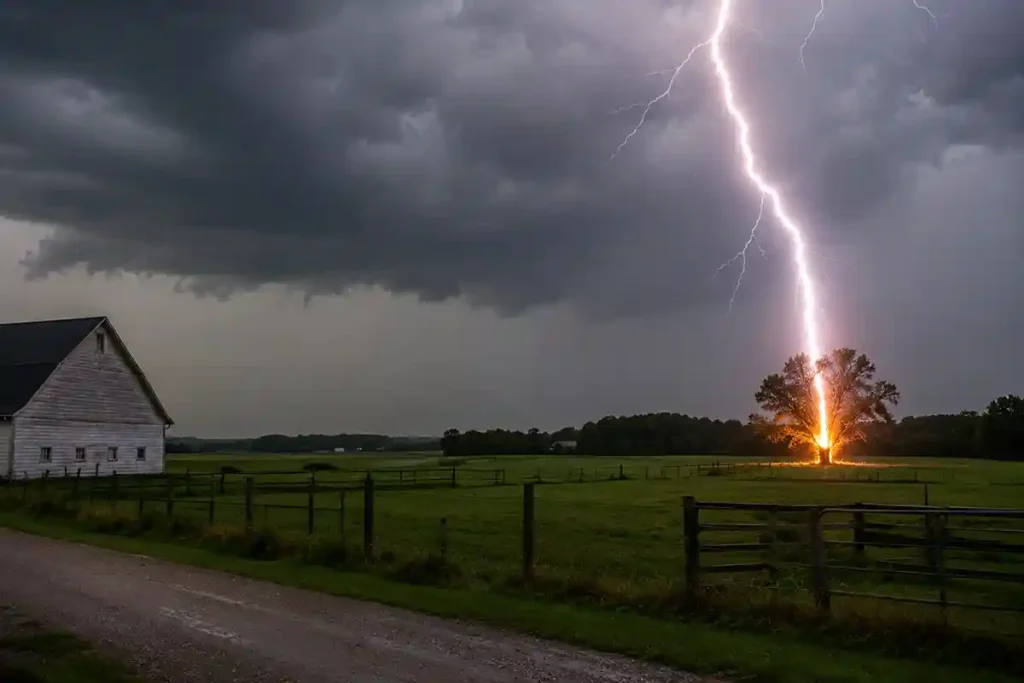


If you’re thinking about installing a residential flagpole, you may have wondered: Can lightning strike a flagpole? The short answer is yes. Like trees, antennas, utility poles, and other tall objects, a flagpole can be struck by lightning under the right conditions.
The good news is that the risk is relatively low for most homeowners, and a properly installed flagpole is generally very safe.
Lightning doesn’t specifically “seek out” metal. Instead, it looks for the easiest path between the storm clouds and the ground. Height, location, and surrounding terrain often play a much larger role than the material itself.
A flagpole standing alone in an open yard is more likely to be struck than one surrounded by taller trees or nearby buildings. Likewise, a 25-foot flagpole generally has a greater chance of being struck than a 15-foot residential model simply because it extends farther into the air.
This is one of the most common misconceptions.
A metal flagpole does not attract lightning simply because it’s made of aluminum. If the pole is struck, the metal provides an excellent path for the electrical current to travel safely toward the ground. The pole doesn’t create the lightning; it simply conducts it if a strike occurs.
In fact, many lightning protection systems intentionally use metal conductors because they safely carry electrical energy where it belongs.
For many residential installations, local building codes do not require a dedicated lightning protection system for a flagpole. However, grounding the pole according to the manufacturer’s recommendations and local electrical codes is always a good practice.
If you live in an area that experiences frequent thunderstorms or if you’re installing a particularly tall flagpole in an exposed location, it’s worth discussing grounding recommendations with your installer or a qualified electrician.
Commercial flagpoles, municipal installations, and very tall flagpoles often have more extensive grounding systems because of their height and location.
A direct lightning strike releases an enormous amount of energy in a fraction of a second. While a quality aluminum flagpole is designed to withstand years of weather exposure, a direct strike may damage the pole, nearby electrical systems, landscaping, or connected equipment.
Fortunately, direct strikes on residential flagpoles are relatively uncommon.
As with any thunderstorm, the safest approach is to stay indoors until the storm has passed. Avoid touching the flagpole, halyard, or any nearby metal objects while lightning is in the area.
Although no flagpole can prevent a lightning strike, a well-engineered flagpole is built to withstand years of demanding outdoor conditions. High-quality aluminum resists corrosion, requires very little maintenance, and provides excellent structural strength in all types of weather.
When properly installed, a telescoping flagpole is designed to provide decades of reliable service while allowing you to proudly display the American flag every day of the year.
Lightning is only one of many environmental factors your flagpole will experience. Wind, rain, snow, sunlight, and changing temperatures all place demands on the pole over its lifetime.
That’s why choosing a well-built, American-made telescoping flagpole is one of the best long-term investments you can make. Combined with proper installation and routine inspection, a quality flagpole will continue looking beautiful and performing reliably for many years.
If you’ve been wondering, can lightning strike a flagpole, the answer is yes. Fortunately, with a properly installed, high-quality telescoping flagpole, you can confidently enjoy displaying your flag through every season while following the same common-sense lightning safety practices you would around any tall outdoor structure.